
Albany Resident Lookup Records
Official records answer narrow questions. In Albany, start by deciding whether a property or event belongs in Linn County or Benton County. The Oregon Blue Book city profile confirms that the city spans both counties. An assessor account can connect an assessed party to a parcel, but it does not name each person living there. A court result can identify a public case, while a historic directory can supply a dated household lead. A sound resident lookup preserves the source, county, date, and identifier for every match.
| Record | What It Confirms | Where | Access |
|---|---|---|---|
| Property assessment or tax account | Assessed party, parcel, legal identifier, situs address, and sometimes a separate mailing address | Linn Assessment & Taxation or the Benton TaxlotOwners layer | Public property route; ownership is not a household roster |
| Recorded instrument | Grantor or grantee, date, document reference, and legal description | Linn County Clerk, State Archives inventory, or Benton Digital Research Room | County-specific index and counter or archive access |
| Court register | Public party name, case number, filing date, type, status, and location | OJD Online Records Search and Linn Circuit Court | Free basic search; documents require another route |
| Voter information | An elector can review their own registration; a lawful list request may return public statutory elements | Oregon My Vote or the prescribed Elections and county request channels | Self-service or formal request, with protected data excluded |
| Vital or historical source | Event, date, place, or a dated address and household clue | Oregon Health Authority, State Archives, Albany directories, or obituary collections | Eligibility, age, and collection rules control access |
Use the property route when an address or parcel is known. Use the court route when a public case reference is known. Use a directory, obituary, probate index, or vital-record channel for a dated family-history question. A business filing or license can establish an official filing or credential fact, but it does not establish a personal residence.
Note: A name alone is weak evidence in Albany, especially when the record may belong to either county.
Albany Court Search Fields
The free OJD Online Records Search does not need sign-in or registration for basic public information. Smart Search accepts a case or citation number or a party name in Last, First form. Put Linn or Benton in the court-location filter before treating a common name as an Albany result. The service is a statewide index, not the official register under ORS 7.020, and it supplies no filed documents.
| OJD field or control | Type | Required | How Albany searches use it |
|---|---|---|---|
| Smart Search | Combined text input | One criterion | Enter a case or citation number, or a party name as Last, First. |
| Wildcard | Text syntax | No | Use a trailing * only after one first-name character, three last-name characters, or four case-number characters. |
| Sounds Like | Checkbox | No | Uses Soundex matching and cannot be combined with a wildcard. |
| Court Location | Dropdown | No | Select Linn or Benton to narrow a same-name result. |
| Search Type and Filed Date | Dropdown and date filter | No | Search type includes Party Name, Case Number, Citation Number, Business Name, and other documented choices; dates reduce broad results. |
Names are not case-sensitive. A compound or hyphenated name may need more than one spelling. The documented result limit is 200 hits, so a location, a date range, or a case category is more useful than guessing that the first result is the right person.
OJD Online Records Search is the free starting point for this Albany resident lookup.
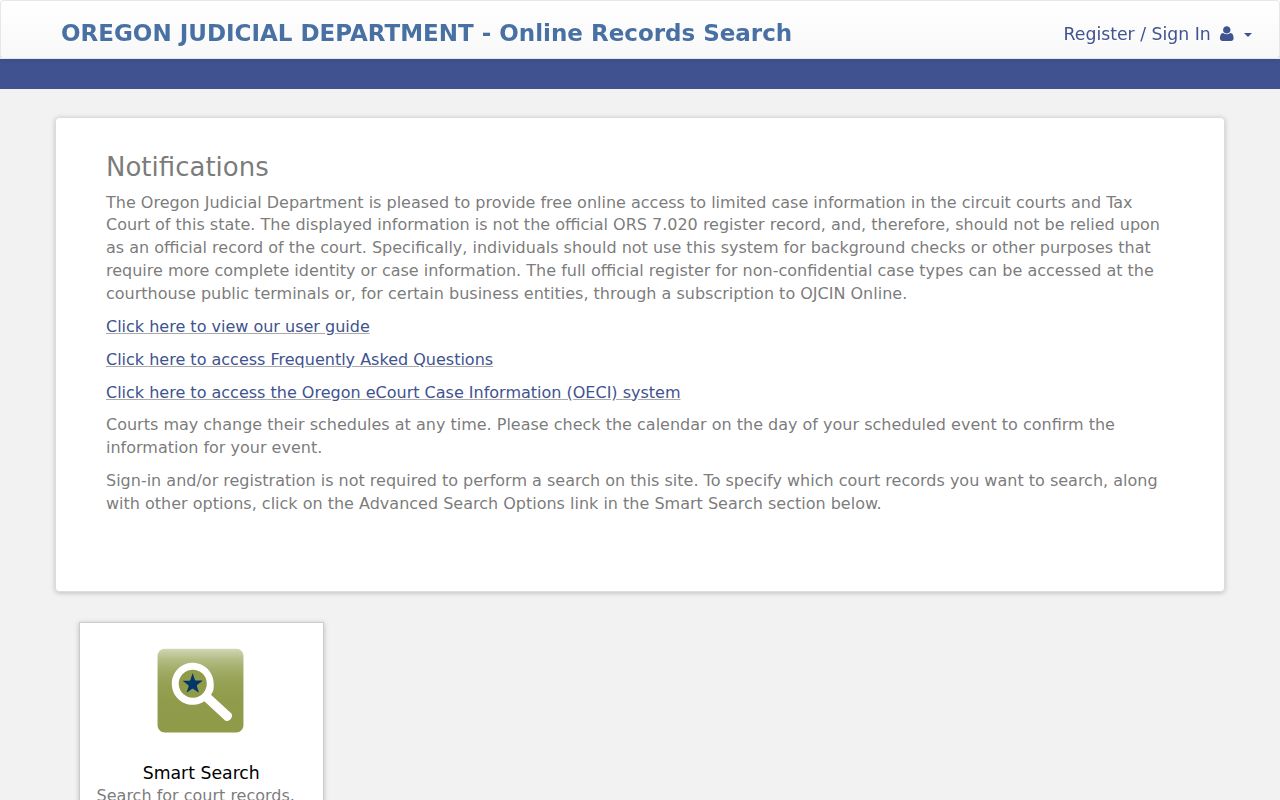
The basic screen is useful for a case reference, but a name result remains a lead until county, case details, and another record agree.
OJD Results for an Albany Resident
An OJD party-name result can list parties with the searched name and public cases. The result area exposes case number, file date, type, status, and location, with sort or filter controls for those columns. Opening a case leads to tabs for Case Information, Party, Events and Hearings, and Financial. The register described by OJD may refer to filed documents, hearings, notices, judgments, and reminders, but the free case page does not provide copies of filed documents.
- Case number: the reference to keep for a court request.
- File date: a date to compare with a known event or time period.
- Type and status: public labels that narrow a result, not proof of identity.
- Location: the court field needed to separate Linn, Benton, and other statewide results.
- Case tabs: the displayed categories for public case information, party, events, hearings, and financial entries.
For a fuller public register, Linn has two public OJCIN computers in Room 107. Remote OJCIN OnLine is a subscription service, and its document access is not available to every account. Confidential or sealed records, including the categories OJD identifies for juvenile, adoption, mental-health adjudication, and VAWA-related matters, remain unavailable.
OJCIN OnLine information describes the register-of-actions route beyond the free Albany resident lookup.
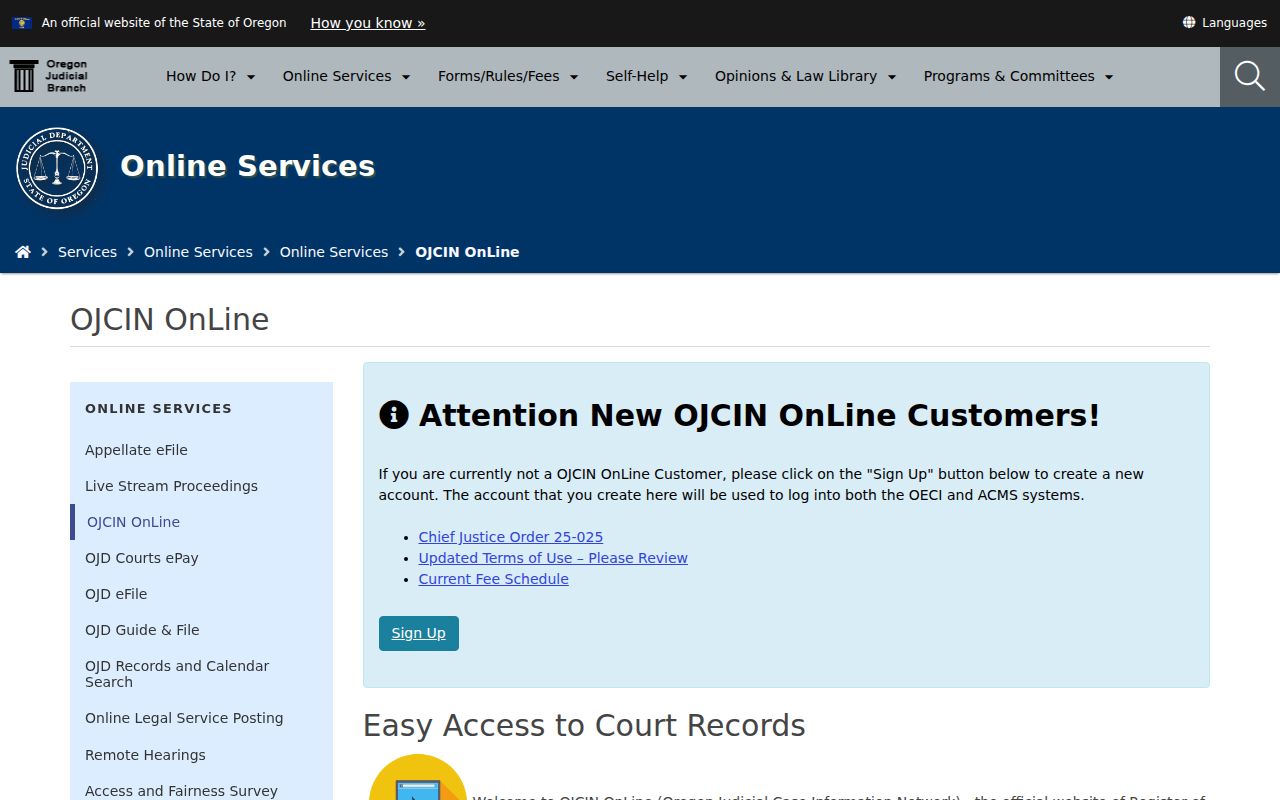
The paid service and Room 107 terminals are different access channels, so neither should be described as a universal document source.
Verifying an Albany Resident Match
Verification works best when a name is anchored to an official identifier and independently checked. Start with the correct county, because Albany’s city name and postal address do not assign a parcel to Linn or Benton. A situs address is the physical parcel address. A tax mailing address is where assessment correspondence goes, and it can be somewhere else. The legal description and tax-lot or account number are stronger links than a street format alone.
- Locate the parcel in the relevant county and copy the account or tax-lot identifier, legal description, situs address, mailing address, and assessed party exactly as displayed.
- Use the same county’s recorder path to find the acquisition instrument. In Benton, begin with the Digital Research Room’s exact-name search and narrow by date or document number.
- Run OJD Smart Search as
Last, First, select Linn or Benton, and narrow the filed-date range. Compare case number, type, status, and location before linking it to the parcel trail. - Match at least two non-name facts, such as address, date, relationship, business registry number, legal description, or case number. Then request the exact document only from its custodian.
- Docket
- A court’s chronological record of actions and events in a case. A docket entry is not the same as a complete court file.
- Index versus image
- An index points to a record through names, dates, or references. An image or copy is the document itself and may have a separate access route.
- Certified copy
- A copy issued with the custodian’s certification. It is obtained from the office that holds the record, not from a search-result screen.
When the online index is not enough, Linn Circuit Court’s Copy & Archives counter in Room 107 accepts a court-record request. Its instructions call for a case number and requested document or hearing date, or the word “unknown” when no case number is known. The court supplies a confirmation ID by email and says responses aim for five court business days, though completion can take ten or more business days. This is distinct from the free web search and the public OJCIN terminals.
Linn publishes a regular paper-copy fee of $3 per case plus $0.25 per page, with fees under $5 waived. A paper certified copy is $5 per document plus $0.25 per page; an emailed regular copy is $3 per case, and hearing audio has separate email or CD fees. An exemplified copy, apostille-certified copy, and certificate of no appeal each have their own published format limits. The Copy & Archives request is the document route, while a Public Records Law request goes only to the body holding an existing nonexempt record and does not require new research or a new list.
Note: Ask a clerk for process or record availability, not for a conclusion that two same-name entries identify one person.
Albany Resident Lookup Access Limits
Oregon My Vote lets an elector check registration, update their own information, review ballot status, find a county office, and locate a drop site. It is not an unrestricted public name finder. The inspected gateway required CAPTCHA and did not expose post-CAPTCHA fields, so no name or date-of-birth search should be inferred. A statewide or smaller-area voter list instead follows the formal Oregon voter-list request process.
Public list elements may include party affiliation, residence and ballot-mailing address, year of birth, precinct information, administrative number, telephone number, and certain participation or ballot-status information when no exception applies. Full birth month and day, Social Security and driver-license numbers, signatures, and protected information are not public. ORS 247.955 also bars commercial use of elector-list information except for a narrow political-resale exception. An inactive registration does not confirm an address.
Oregon My Vote is the proper self-service gateway for an elector’s own record.
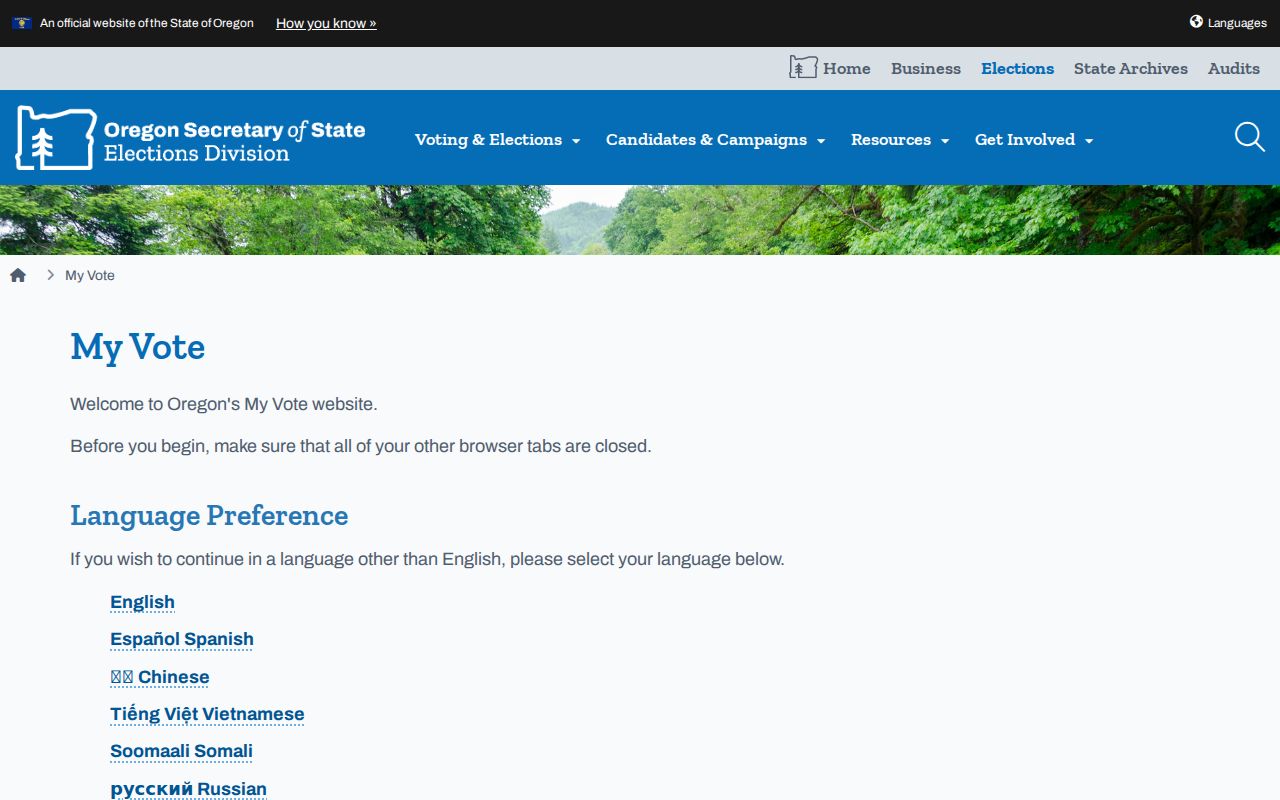
The separate list-request route has statutory exclusions and should never be treated as a live list of every Albany household.
Oregon Health Authority issues current birth, death, marriage, divorce or dissolution, and domestic-partnership certificates. Birth records and indexes stay restricted for 100 years; death, marriage, and dissolution records have 50-year restrictions. The historic access rule does not bypass eligibility for contemporary certificates. A divorce certificate is also different from the actual decree, which is held through the court route.
For a restricted certificate, OHA identifies the named person, certain close relatives, legal guardians or representatives, qualified government agencies, and other statutory categories as possible eligible requesters. Relationship proof can be required, and an ineligible requester can use written permission from an eligible person with a notarized signature. OHA publishes $25 for a first death, marriage, or dissolution search and certificate, while its birth form distinguishes a $25 computer-issued certificate from a $30 full image where available. The official order routes include online or phone, mail, drop box, and scheduled counter appointment.
Oregon Vital Records shows the official certificate-order channels.
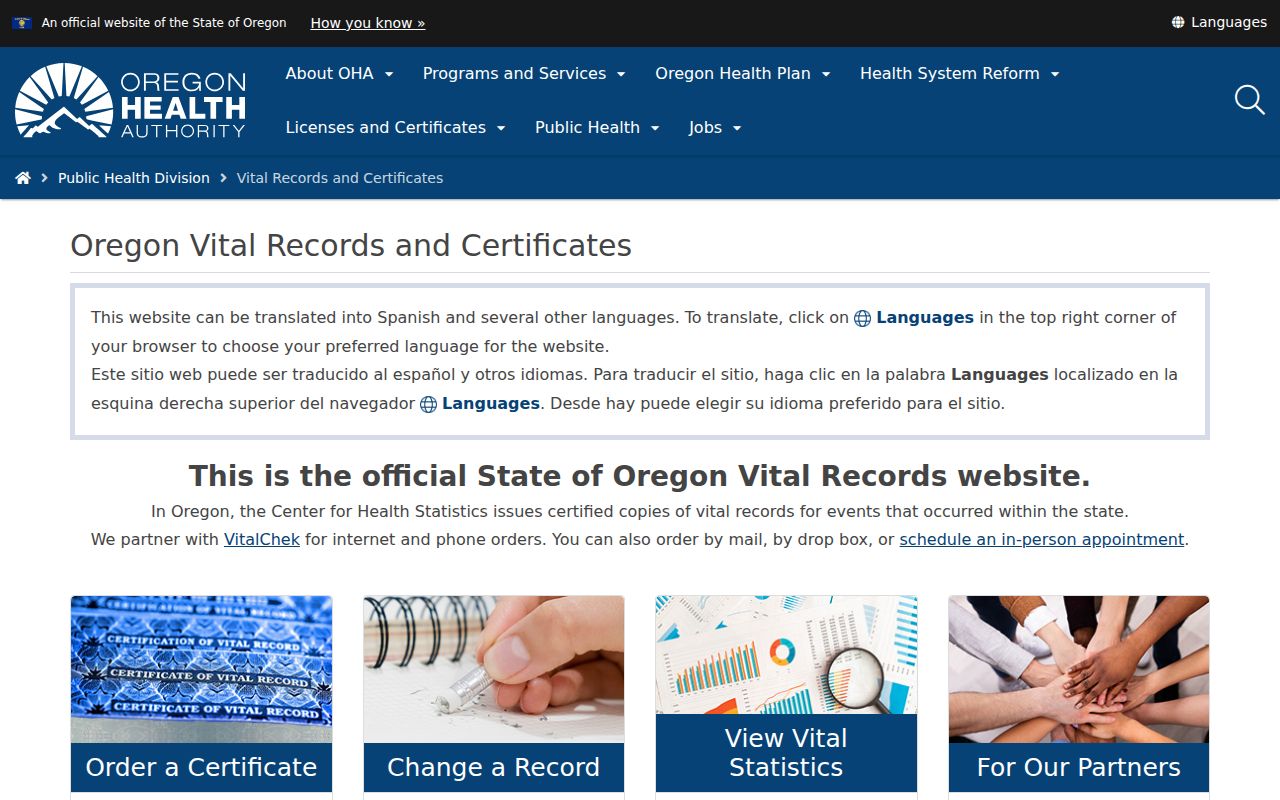
For an eligible request, use the OHA form and required identification or proof rather than treating an index entry as a certificate.
Historic Albany Resident Leads
Historical local sources add a date to a name. The Albany city-directory collection has 40 digitized directories beginning in 1878, but it identifies gaps for 1912 through 1936 and 1942 through 1946. Search an exact year, name variant, or address in the OCR PDF, then inspect the page image. A listing can describe a household, business, address, or some telephone information at publication time. It cannot establish current status.
Albany Public Library cardholders can use HeritageHub for obituary and death-notice research. An obituary can offer a dated lead, but a material claim needs corroboration through the relevant vital, probate, or court source. The Linn Genealogical Society’s Tripp Reference Room at Albany Regional Museum is another local route for directories, yearbooks, manuscripts, and research assistance. These historic sources are especially useful when a resident lookup turns into family history rather than a current-record question.
Business Roles in an Albany Lookup
The Oregon Secretary of State Business Name Search accepts a business name or business registry number. Active Business Registration Records can return registry number, business name, entity type, registry date, registered agent name and address, business mailing address, and associated names. Those facts can verify a filing role or business connection. They do not establish where an officer, organizer, or registered agent currently lives.
For a credential question, use the Oregon Business Xpress License Directory to reach the particular issuing authority, then check the board’s own status date and result. Albany does not require a general business license, so there is no municipal all-business directory to substitute for the state record. The City’s door-to-door solicitor or peddler rule is also not a resident list.
Albany Resident Lookup Privacy Limits
Some gaps are intentional. Oregon’s Address Confidentiality Program protects the actual address of qualifying participants and assigns a substitute address through the Department of Justice. Participant information is excluded from voter lists. Oregon law also permits a separate voter residence-address exemption for some safety situations, which does not erase unrelated government records. DMV information, full protected voter fields, and confidential court or vital material are not a backup source for a resident lookup.
Oregon Consumer Privacy Act requests can address data held by a covered commercial controller. They do not amend a deed, voter record, court file, library collection, or archive. For an error in an official record, contact its original custodian: the assessor for an assessment record, the clerk or recorder for an instrument process, the elections office for registration, the court for a case record, and OHA for a vital record. A written Oregon Public Records Law request belongs with the body that holds an existing, nonexempt record. It does not require that body to create a new list or research conclusion.
Oregon voter-list request information explains the formal route and its limits.
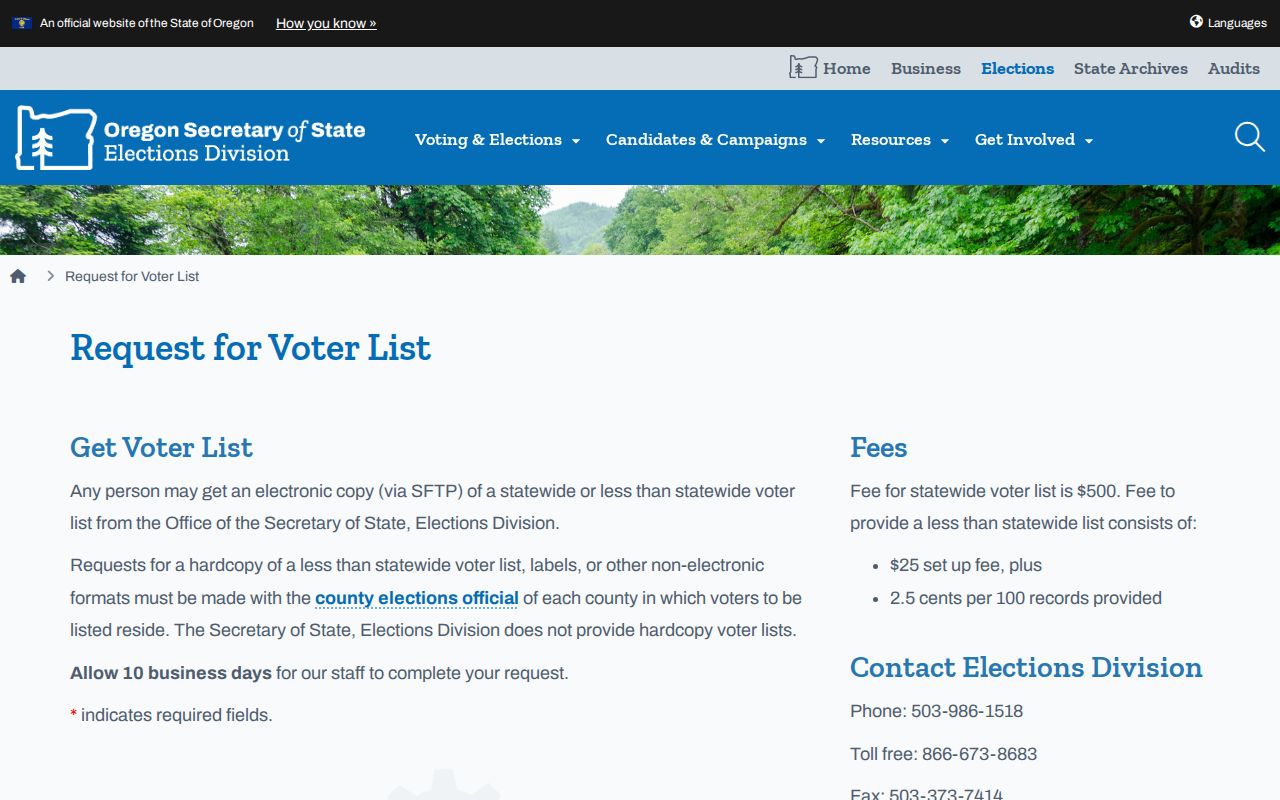
The request process is useful for lawful records access, not for bypassing protected voter information or turning a list into a personal tracking tool.
Lawful use. Use Albany resident records for personal, lawful research and verify key facts with the custodian. Public records never authorize stalking, harassment, threats, or harm; Oregon laws including ORS 163.732 and ORS 166.065 address that conduct.